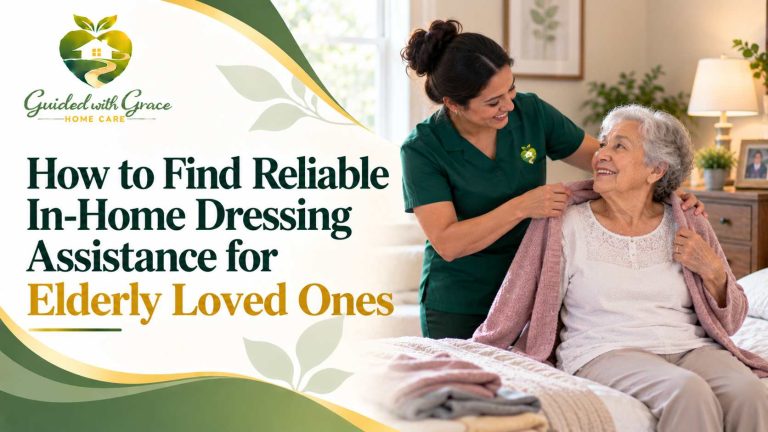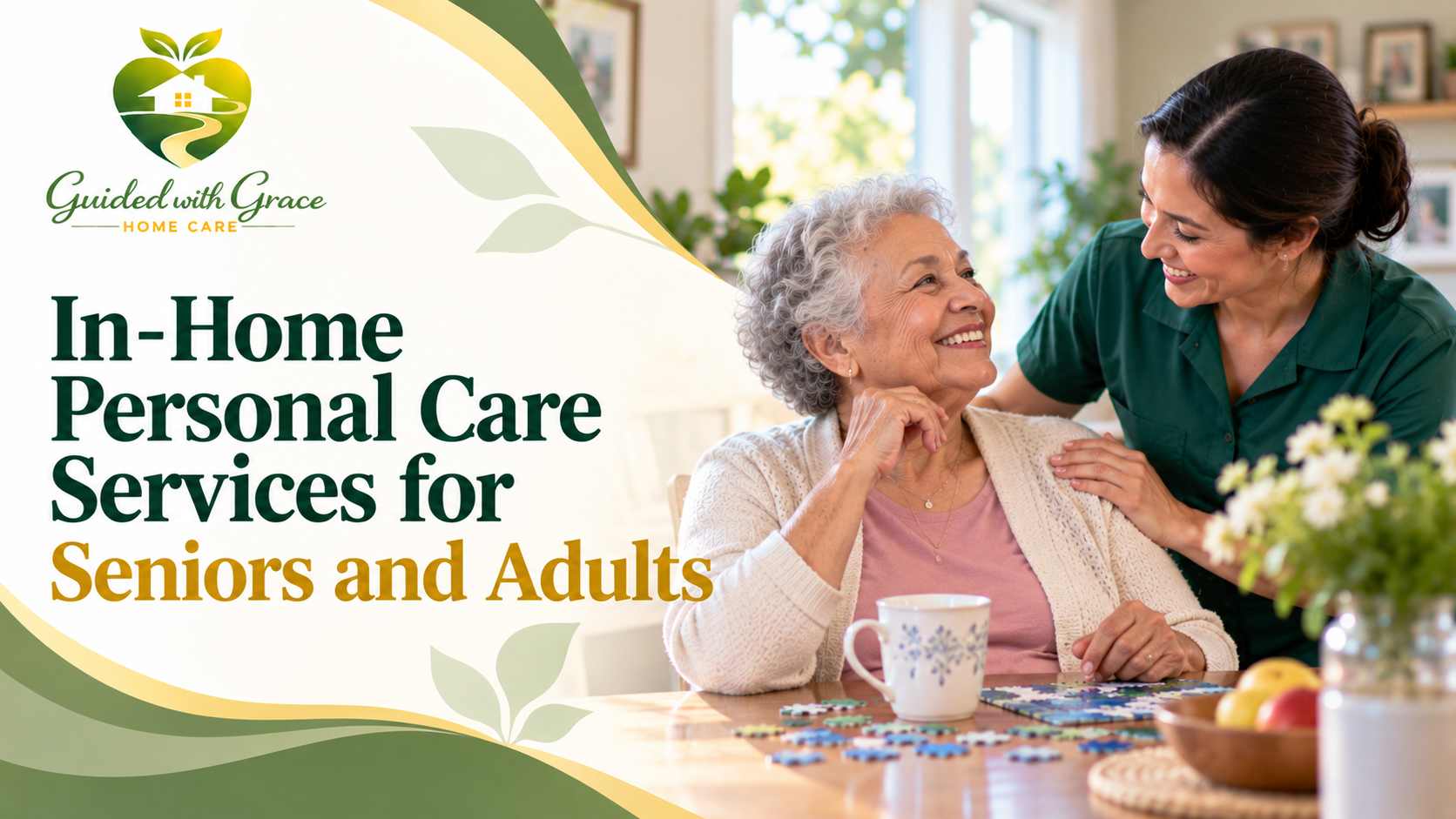
Needing help with a shower or getting dressed is one of the hardest changes a person can face. It touches privacy, pride and independence all at once. In-home personal care services exist so that help can happen in familiar surroundings, on a schedule that fits, with a caregiver who treats every task with respect. At Guided with Grace, our personal care services support seniors and adults across Naperville and the surrounding counties with the daily activities that have become difficult to manage alone.
What Are In-Home Personal Care Services?
In-home personal care services are non-medical, hands-on help with the basic tasks of daily living, delivered in the person’s own home by a trained caregiver. Clinicians call these tasks activities of daily living, or ADLs: bathing, dressing, grooming, toileting, moving from bed to chair, and eating. Help with these tasks is often called ADL assistance at home.
Personal care is different from skilled nursing. Caregivers do not give injections, change sterile dressings or manage medical equipment. Instead, they provide the steady, practical support that lets someone stay safe and comfortable at home, often alongside family members, doctors and, when needed, a home health agency. Good ADL assistance at home also means knowing when to step back and let the person do what they still can.
What Personal Care Assistance for the Elderly Includes
Every plan is built around the individual, but personal care assistance for the elderly and for adults of any age usually covers the areas below.
Bathing and hygiene
Help getting in and out of the shower or tub, washing, drying and applying lotion, with standby support for people who can manage most steps themselves. Oral care, handwashing and hair washing are part of the routine.
Dressing and grooming
Choosing clothes, managing buttons, zippers and compression stockings, shaving, hair care and nail filing. Small grooming routines often matter a great deal to how someone feels about the day.
Toileting and continence care
Discreet help using the bathroom, changing continence products and keeping skin clean and dry, which also helps protect against irritation and infection.
Mobility and transfers
Safe help moving from bed to chair, standing up, walking with a cane or walker, and navigating stairs. For people at higher fall risk, our mobility assistance focuses on safe movement throughout the home.
Meals and eating support
Preparing meals that fit dietary needs, encouraging fluids and helping at mealtimes when hand strength or coordination is limited.
Medication reminders and routines
Reminders to take medication at the right time, plus help keeping a steady daily rhythm of waking, meals, activity and rest. Caregivers remind rather than administer.
Most in-home personal care services combine several of these tasks in one visit, so the caregiver can move naturally through a morning or evening routine rather than ticking boxes.
Who Benefits From In-Home Personal Care Services?
In-home personal care services suit a wider group of people than many families expect.
Seniors who want to age in place
Many older adults can manage much of their day but need help with a few tasks, most often bathing and dressing. In-home personal care for seniors can fill those gaps and delay or avoid a move to assisted living. For many families, in-home personal care for seniors starts with just two or three visits a week.
Adults living with disability or chronic illness
Personal care is not only for older people. Adults with multiple sclerosis, Parkinson’s disease, stroke-related weakness, arthritis or other conditions may need the same help with daily living activities for seniors that older adults receive, delivered in a way that supports as much independence as possible.
People recovering after surgery or a hospital stay
After a joint replacement, fall or illness, even simple tasks can feel risky. Short-term in-home personal care services can bridge the weeks of recovery until strength returns.
People living with dementia
Memory loss can make bathing and dressing confusing or frightening. Caregivers who understand dementia use calm cues, simple choices and consistent routines. Families can pair personal care with our dementia and Alzheimer’s care.
Family caregivers who need backup
Many spouses and adult children already provide care. Bringing in a professional for the most physically demanding tasks, such as showers and transfers, protects both the family caregiver’s health and the relationship.
Signs It May Be Time for Personal Care at Home
Families often notice the need for help with daily living activities for seniors gradually. Common signs include:
- Wearing the same clothes for several days or skipping showers
- Unexplained bruises, near-falls or difficulty getting up from a chair
- Unwashed hair or neglected nails in someone who used to be meticulous
- Weight loss, spoiled food in the fridge or missed meals
- Missed medications or confusion about the daily routine
- A family caregiver who is exhausted, injured or struggling to keep up
If two or three of these sound familiar, an assessment for in-home personal care services is a sensible next step. It does not commit you to anything, and it gives you a clear picture of what help would look like.
How Our In-Home Personal Care Services Work
We keep the process simple because families contacting us are often already stretched. Whether your family needs help with daily living activities for seniors or support for a younger adult, the steps are the same.
- A conversation. You call or send a message, and our team talks through what is happening and what you hope care will achieve.
- A free in-home assessment. We visit, meet your loved one and look at routines, health conditions, mobility and the layout of the home, especially the bathroom.
- A written care plan. Together we agree which tasks the caregiver handles, when visits happen and how your loved one prefers things done.
- Caregiver matching. We introduce a caregiver chosen for the required skills as well as personality, and we stay involved to confirm the fit.
- Ongoing adjustment. As needs change, the plan changes too. Hours can increase after a hospital stay or reduce when things settle, with the same caregiver wherever possible.
Dignity and Privacy Come First
Personal care is intimate, and how in-home personal care services are delivered matters as much as what is done. A good personal caregiver for elderly adults explains each step, offers choices, keeps the person covered during bathing and lets them do everything they can for themselves. Respectful personal care assistance for the elderly also means never rushing.
We pay attention to preferences that are easy to overlook: a bath or a shower, morning or evening routines, the products someone has always used, or a preference for a caregiver of the same gender. These details go into the care plan so they never depend on memory.
Consistency supports dignity too. Guided with Grace assigns a consistent personal caregiver for elderly clients who gets to know your loved one over months and years, so personal tasks are handled by a familiar face rather than a new stranger each week.
Personal Care Attendant Services for Adults of All Ages
The term personal care attendant services is often used for support given to younger adults with disabilities, while senior care describes the same help for older people. In practice, the tasks overlap almost entirely. Our in-home personal care services are available to adults who need help with daily activities, whatever their age, and the care plan reflects the person’s goals, whether that is staying active in the community or simply getting through the morning safely.
Where personal care attendant services are funded through a state program, eligibility and provider rules vary, so check with the program directly about which agencies it works with.
How Families Pay for Personal Care at Home
Knowing the payment options early prevents surprises.
- Private pay. Most families pay for in-home personal care services directly, by the hour. Rates depend on the number of hours, time of day and level of care, so ask for written rates and minimums.
- Original Medicare does not cover custodial care, meaning non-medical help with daily activities, when that is the only care needed. Original Medicare does not cover custodial care, meaning non-medical help with daily activities, when that is the only care needed. Medicare.gov’s home health coverage page lists what is and isn’t covered.
- Long-term care insurance. Many policies cover in-home personal care services once benefit triggers, often a need for help with a set number of ADLs, are met. Review the elimination period and ask what documentation your insurer requires.
Finding a Personal Care Aide Near Me: What to Look For
Searching for a personal care aide near me brings up agencies, registries and individual caregivers. Before you choose a provider of in-home personal care services, check that:
- The agency is licensed by the Illinois Department of Public Health and insured.
- Caregivers are employees who have passed fingerprint background checks.
- Someone visits the home to assess needs before care starts.
- The agency can explain how it keeps the same caregiver in place.
- Rates, minimum hours and cancellation terms are provided in writing.
When the search for a personal care aide near me narrows to one or two agencies, ask directly whether their caregivers are comfortable with the specific tasks your loved one needs, such as a walk-in shower, a transfer from a wheelchair or dementia-related care.
Why Families Choose Guided with Grace
Guided with Grace Home Care is a licensed and insured non-medical home care agency based in Naperville, serving Kendall, Will, DuPage and Kane Counties. Families choose our in-home personal care services for a few practical reasons:
- Consistent caregivers who build lasting relationships with the people they support
- Background-checked caregivers screened before they enter a client’s home
- Care available 24/7, including overnight support when needed
- A free care assessment and a written plan before care begins
- A family-centered approach, with care that adjusts as needs change
Our personal care services for seniors in Naperville often work alongside companion care, so the same caregiver can help with a shower in the morning and share lunch and conversation afterward.
Talk With Us About Personal Care
If daily tasks have become harder for someone you love, you do not need every answer before you call. Our team provides personal care services for seniors in Naperville and across four counties. Schedule a free care assessment or call 630-608-3956, and we will help you decide whether in-home personal care services are the right fit and what a realistic schedule could look like.
Frequently Asked Questions
What is included in in-home personal care services?
Typical help covers bathing, dressing, grooming, toileting, transfers, meals and medication reminders. ADL assistance at home is written into a care plan, so each visit follows your loved one’s routine rather than a generic checklist.
How is personal care different from home health care?
Home health is skilled, doctor-ordered care such as nursing or therapy. Personal care assistance for the elderly and adults is non-medical, focused on daily tasks, and can continue long after home health visits end.
Can a personal caregiver help with dementia-related care?
Yes. A personal caregiver for elderly adults living with dementia uses calm cues and steady routines. Guided with Grace can combine personal care with dementia support so the same familiar caregiver handles both.
Is in-home personal care for seniors available on weekends?
Many agencies provide weekend, holiday and overnight visits. Guided with Grace offers care 24/7, so help can cover the times when family support is hardest to arrange, including early mornings and late evenings.
Does insurance cover personal care attendant services?
Original Medicare generally does not. Long-term care insurance often does once benefit triggers are met, and some state and VA programs fund personal care attendant services for eligible adults. Check eligibility first.
How quickly can personal care services for seniors in Naperville begin?
Care can often start within days of the free assessment, and sooner after a hospital discharge when a caregiver is available. Call early and share key dates so the schedule can be arranged in advance.