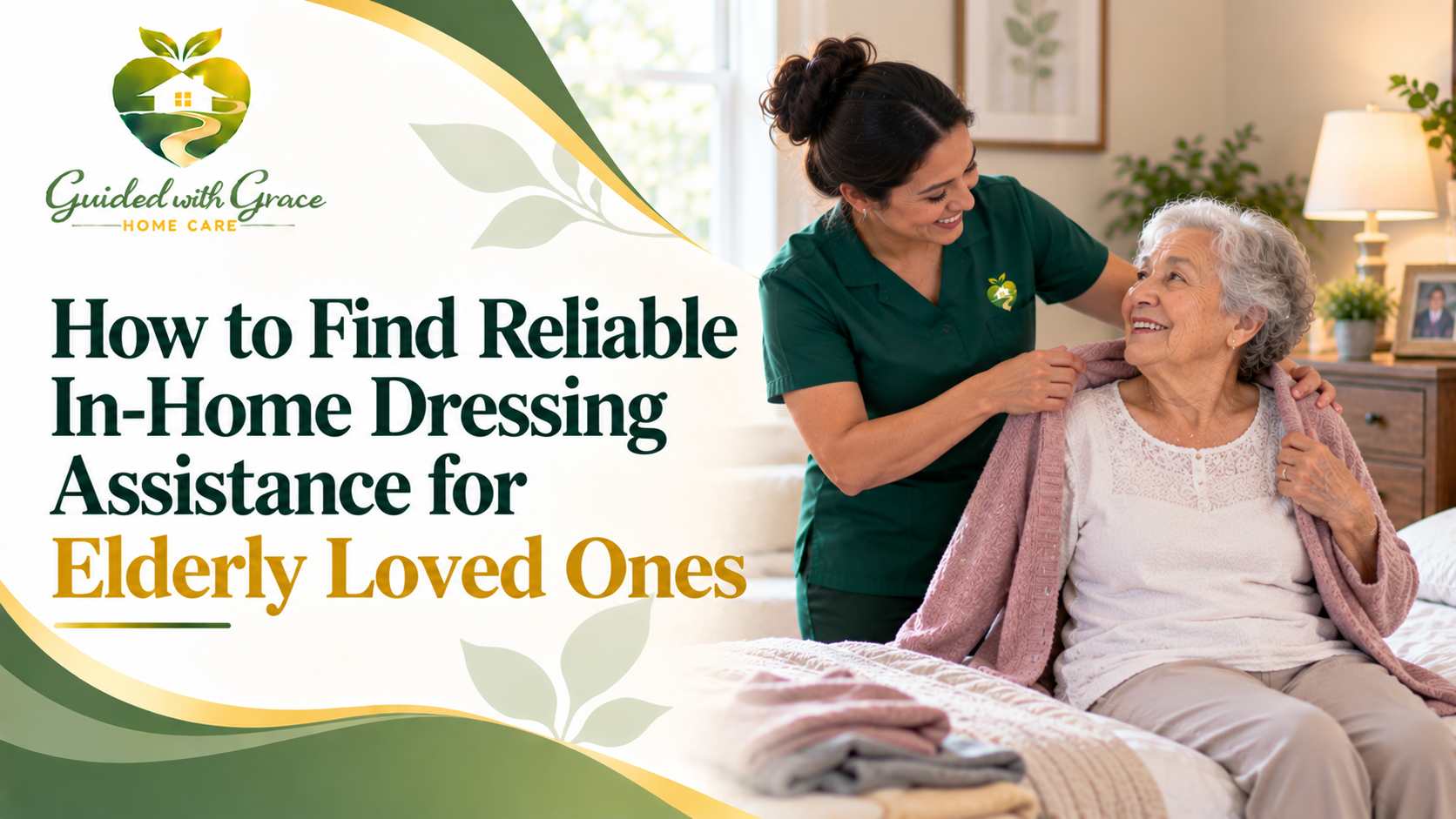
Getting dressed is something most of us do without thinking, until arthritis, a stroke, surgery, or memory loss turns it into a daily struggle. Dressing assistance for elderly adults helps them start and end each day comfortably while keeping as much independence as possible. At Guided with Grace, dressing and grooming support is included in our personal care services, delivered by consistent caregivers across Naperville and the western suburbs.
This guide explains what dressing assistance for elderly adults involves, who benefits, and how to find a reliable caregiver in 2026.
What Is Dressing Assistance for Elderly Adults?
Dressing assistance for elderly adults is non-medical, hands-on or verbal support with choosing clothing, putting it on, fastening it, and changing at the end of the day. It is one of the six basic activities of daily living used by healthcare professionals to assess independence, alongside bathing, toileting, transferring, continence, and eating.
Dressing assistance for elderly clients can range from simply laying out clothes to fully dressing someone who cannot move their arms or legs. The best caregivers do only what is needed, encouraging the person to complete each step they still can.
Why Dressing Becomes Difficult With Age
Several common conditions create a need for dressing assistance for elderly adults:
- Arthritis limits grip and joint movement, making buttons, zippers, and socks painful
- Stroke can weaken one side of the body
- Parkinson’s disease affects fine motor control and balance
- Dementia disrupts the sequence of dressing and the ability to choose suitable clothes
- Vision loss makes it hard to match items or see fastenings
- Balance problems make standing on one leg to put on trousers risky
According to the Centers for Disease Control and Prevention, about 1 in 4 adults aged 65 and older falls each year. Dressing while standing, especially putting on pants or shoes, is a frequent moment of instability, which is one reason dressing assistance for elderly adults matters.
Help Getting Dressed Elderly Adults Can Rely On
Reliable help getting dressed elderly loved ones can count on is the core of dressing assistance for elderly adults and usually follows a consistent process:
- Prepare the space: a warm room, a sturdy chair with arms, and clothes laid out in the order they go on
- Offer limited choices: two outfits rather than a full closet
- Sit to dress: putting on pants, socks, and shoes while seated reduces fall risk
- Dress the weaker side first and undress it last
- Use adaptive aids: sock aids, long-handled shoehorns, button hooks, and reachers
- Check comfort: no twisted seams, tight waistbands, or pressure points
- Finish with grooming: hair, shaving, glasses, hearing aids, and dentures
Good help getting dressed elderly adults receive should feel collaborative, not rushed. A senior who is allowed time to fasten their own buttons keeps both dexterity and self-esteem.
Grooming Assistance for Seniors Goes Hand in Hand
Dressing assistance for elderly adults rarely happens alone. Grooming assistance for seniors covers the finishing touches that help people feel like themselves:
- Brushing and styling hair
- Oral care and denture cleaning
- Applying lotion, deodorant, or makeup
- Nail filing (diabetic foot care should be left to a podiatrist)
- Putting on jewelry, glasses, and hearing aids
Shaving and hair care for elderly clients deserves particular care. Electric razors are often safer than blades for people on blood thinners or with shaky hands, and hair can be washed at a sink or with dry shampoo when a full shower is not practical.
For many seniors, grooming assistance for seniors is about identity as much as hygiene. A man who shaved every morning for 50 years, or a woman who never left the house without her hair done, will feel noticeably better when those routines continue. Senior grooming services at home make that possible without trips to a salon or barber.
Morning Routine Caregiver and Evening Care Visits for Seniors
Dressing assistance for elderly needs cluster at two points in the day, which is why many families schedule a morning routine caregiver and evening care visits for seniors rather than long all-day shifts.
The Morning Visit
A morning routine caregiver typically helps with getting out of bed, toileting, washing, dressing, grooming, breakfast, and medication reminders. Starting the day clean and dressed has a real effect on mood and activity levels. People who stay in nightclothes all day are often less likely to move around, eat well, or engage with others.
The Evening Visit
Evening care visits for seniors reverse the process: changing into nightwear, removing makeup or dentures, skin care, toileting, and a safe transfer into bed. Evening visits also reduce nighttime fall risk by making sure the path to the bathroom is clear and lighting is in place.
Guided with Grace provides dressing assistance for elderly clients 24/7, so morning and evening visits can be scheduled at the times your loved one has always kept, rather than whatever slots are convenient for the agency.
Dressing Help for Stroke Patients
Stroke often leaves weakness or paralysis on one side of the body, which makes dressing assistance for elderly stroke survivors especially important. Effective dressing help for stroke patients follows a few established principles commonly taught by occupational therapists:
- Dress the affected (weaker) arm or leg first
- Undress the stronger side first
- Choose loose, stretchy clothing and front-opening tops
- Replace buttons and laces with Velcro, magnetic closures, or elastic laces
- Sit in a stable chair with feet flat on the floor
Dressing help for stroke patients should reinforce, not undo, what the therapy team is working on. Caregivers who follow the therapist’s techniques help stroke survivors rebuild independence. Our mobility assistance service often complements dressing support during stroke recovery.
Dressing Assistance After Surgery
Hip replacements, knee replacements, shoulder surgery, and spinal procedures can all come with temporary movement restrictions. Dressing assistance after surgery is a short-term form of dressing assistance for elderly adults that helps the person follow these precautions safely.
After a hip replacement, for example, patients are often told by their surgeon to avoid bending past a certain angle, crossing their legs, or twisting. That makes putting on socks, shoes, and pants hard without adaptive equipment or help. After shoulder surgery, a person may be unable to lift one arm overhead for weeks.
Dressing assistance after surgery should always follow the specific instructions from the surgeon or therapist. A caregiver can learn the precautions, use the recommended aids, and gradually step back as the person heals.
Helping a Loved One With Dementia Get Dressed
Dementia changes how dressing assistance for elderly adults should be given. A person may put clothes on in the wrong order, wear several layers in summer, refuse to change, or become anxious when faced with too many choices.
Helpful strategies include:
- Laying out clothes in the order they are put on
- Offering two choices rather than open-ended questions
- Giving one simple instruction at a time
- Choosing clothing with few fastenings
- Keeping several copies of a favorite outfit if the person always wants to wear it
- Staying calm and trying again later if they resist
The Alzheimer’s Association offers additional caregiving guidance for families. Our dementia and Alzheimer’s support caregivers are trained in these approaches and benefit from knowing each client’s preferences over time.
Common Mistakes Families Make
Even with the best intentions, families providing dressing assistance for elderly parents sometimes:
- Do everything for the person, which speeds up loss of ability
- Rush the routine, increasing stress and fall risk
- Ignore footwear, allowing slippers without backs or socks on hard floors
- Overlook adaptive clothing, which can make dressing much easier
- Wait for a fall before getting help
Recognizing these patterns early lets you set up a safer routine before an accident.
How to Find Reliable Dressing Assistance for Elderly Loved Ones
Finding a dependable provider of dressing assistance for elderly adults takes a little research. Here is a practical step-by-step approach.
Step 1: Define the Needs
List exactly which parts of dressing and grooming are difficult, what time of day help is needed, and any medical conditions involved, such as stroke, recent surgery, or dementia.
Step 2: Look for Licensed, Insured Agencies
In Illinois, non-medical home care agencies must be licensed by the state. Hiring dressing assistance for elderly loved ones through a licensed, insured agency gives you background-checked caregivers and backup coverage if a caregiver is unavailable.
Step 3: Ask the Right Questions
- Will the same caregiver come each visit?
- What training do caregivers receive in transfers, dementia care, and post-surgical precautions?
- Can visits be scheduled early in the morning and later in the evening?
- Is there a minimum visit length?
- How is the care plan written and updated?
- How does the agency communicate with families?
Step 4: Request an In-Home Assessment
A good agency will visit, meet your loved one, review the bedroom and bathroom layout, and recommend adaptive equipment.
Step 5: Review the Fit After the First Few Weeks
Pay attention to how your loved one responds to the caregiver. Comfort and trust matter as much as skill for something as personal as dressing.
Guided with Grace is a licensed and insured non-medical home care agency in Illinois, serving Kendall, Will, DuPage, and Kane Counties. We provide dressing assistance for elderly clients across these areas, starting every relationship with a free in-home care assessment and matching caregivers based on both skills and personality.
Next Steps for Dressing Assistance for Elderly Loved Ones
Dressing assistance for elderly adults is often the support that keeps daily life on track. A well-planned morning and evening routine can protect independence, reduce fall risk, and help your loved one feel like themselves every day.
If you are ready to explore support, schedule a free care assessment with Guided with Grace and we will help you build a routine that fits.
Frequently Asked Questions
What clothing makes dressing easier for seniors?
Loose, stretchy clothing with elastic waists, front-opening tops, Velcro or magnetic closures, and slip-on shoes with backs are easiest. Adaptive clothing designed for seated dressing or limited mobility can also help a great deal.
How long does a dressing assistance visit take?
Many agencies combine dressing assistance for elderly clients with bathing, grooming, and breakfast in a morning visit of two to four hours. Enough time keeps the routine calm and lets your loved one do as much as they can.
Can a caregiver help only in the morning and evening?
Yes. Many families schedule short morning and evening visits focused on getting up, dressing, and getting ready for bed. Check each agency’s minimum visit length, since this varies between providers.
Does Guided with Grace provide dressing help in Naperville?
Yes. Guided with Grace provides dressing assistance for elderly adults, plus grooming and personal care, in Naperville and throughout Kendall, Will, DuPage, and Kane Counties, with care available 24/7.
How do I encourage independence while helping a parent dress?
Lay out clothes in order, offer limited choices, and let your parent complete each step they can manage, even if it takes longer. Step in only for the difficult parts, such as socks, shoes, or fastenings.
Is dressing help available short term after surgery?
Yes. Many agencies provide short-term dressing assistance for elderly adults recovering from hip, knee, or shoulder surgery. Caregivers follow the surgeon’s precautions and reduce help as strength returns.
What adaptive tools help seniors dress independently?
Useful tools include sock aids, long-handled shoehorns, button hooks, zipper pulls, reachers, and elastic shoelaces. An occupational therapist can recommend the right options for your loved one’s specific needs.