Bathing is often the first daily task that becomes unsafe for an aging parent, and it is usually the one they are most reluctant to discuss. Professional bathing assistance for elderly at home lets your loved one stay clean, comfortable, and safe without giving up privacy or moving out of the house they know. At Guided with Grace, bathing support is part of our broader personal care services, delivered by consistent, background-checked caregivers across Naperville and the western suburbs.
This guide explains what bathing assistance for elderly at home includes, how to recognize when it is needed, and how to choose the right provider in 2026.
What Is Bathing Assistance for Elderly at Home?
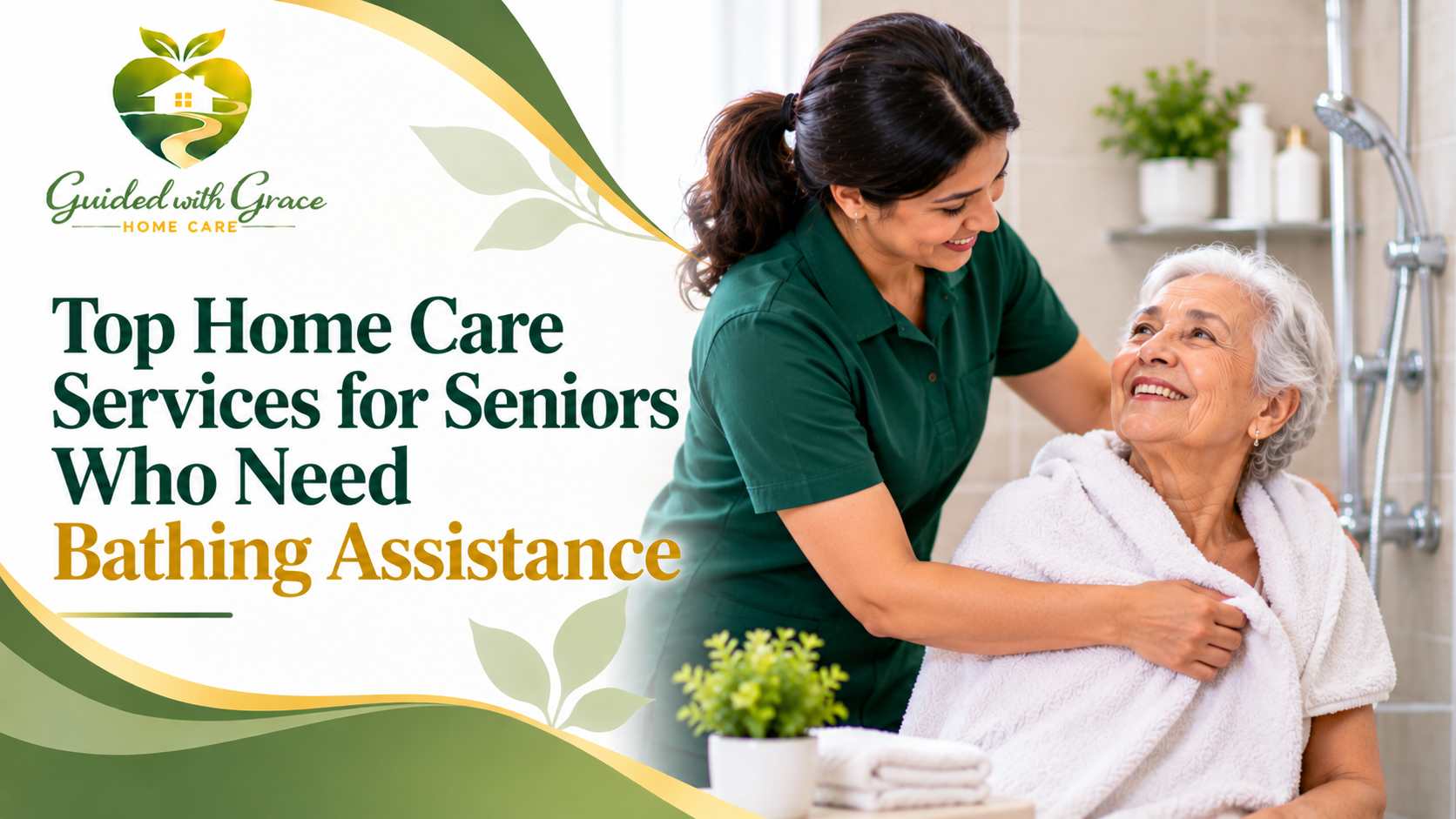
Bathing assistance for elderly at home is non-medical, hands-on help with washing, showering, or sponge bathing, provided by a trained caregiver in the senior’s own residence. It covers the full routine: preparing the bathroom, helping with safe transfers in and out of the tub or shower, washing hair and body, drying, applying lotion, and dressing afterward.
The goal of bathing assistance for elderly at home is not to take over. A good caregiver encourages your loved one to do as much as they safely can, stepping in only for the parts that have become difficult, such as reaching the feet, stepping over a tub edge, or standing for long periods.
Bathing assistance for elderly at home typically includes:
- Setting the water temperature and checking it before use
- Arranging towels, toiletries, and clean clothes within reach
- Steadying the person during transfers using grab bars or a shower chair
- Washing areas that are hard to reach
- Checking skin for redness, sores, or bruising
- Drying thoroughly, especially between skin folds and toes
- Helping with dressing, grooming, and moisturizing
Why Bathing Becomes Risky for Older Adults
The bathroom is one of the most hazardous rooms in the house. Wet tile, hard surfaces, and the act of stepping over a tub wall combine with age-related changes in balance, strength, and vision. According to the Centers for Disease Control and Prevention, about 1 in 4 adults aged 65 and older falls each year, and falls are a leading cause of injury in this age group. That is exactly where bathing assistance for elderly at home makes the biggest difference.
Beyond falls, other risks include:
- Scalds from water that is too hot, especially for seniors with reduced sensation from diabetes or neuropathy
- Dizziness from warm water lowering blood pressure, or from standing up too quickly
- Skin breakdown when areas are not washed or dried properly
- Fatigue, which can make a long shower genuinely exhausting
Many families notice warning signs before an accident happens: a parent wearing the same clothes for days, a noticeable body odor, hair that is unwashed, or excuses about “already having showered.” These are rarely about not caring. They usually reflect fear of falling, pain, or embarrassment, and they often mean it is time to consider bathing assistance for elderly at home.
How a Caregiver to Help With Bathing Protects Dignity
Asking for help in the bathroom is deeply personal. Dignity is the foundation of good bathing assistance for elderly at home, and the right caregiver to help with bathing understands that the emotional side of the task matters as much as the physical one.
In practice, that means keeping the person covered with a towel except for the area being washed, explaining each step before doing it, letting them choose the time of day and products they prefer, and never rushing. Consistency matters too. Seniors accept help far more readily from someone they recognize than from a different stranger each week, which is why Guided with Grace assigns the same caregiver wherever possible.
A caregiver to help with bathing should also respect cultural, religious, and gender preferences. If your mother would only feel comfortable with a female aide, that is a reasonable request to raise with any agency.
Shower Assistance for Seniors: Setting Up a Safer Bathroom
Effective shower assistance for seniors starts before anyone turns on the water. During an in-home assessment for bathing assistance for elderly at home, a caregiver or care manager will usually look at the bathroom layout and suggest practical changes. Common recommendations include:
- Grab bars installed into wall studs (towel racks are not designed to hold body weight)
- A shower chair or tub transfer bench
- A handheld showerhead so the person can stay seated
- Non-slip mats inside and outside the tub
- A raised toilet seat with arms
- Good lighting, including a nightlight
- Setting the water heater to no higher than 120°F, a commonly recommended limit for preventing scalds
With the right equipment, shower assistance for seniors becomes quicker, calmer, and much safer, and bathing assistance for elderly at home often requires less hands-on help. Some families find that once the bathroom is adapted, their parent needs only standby supervision.
When a Sponge Bath Is the Better Choice
Not every senior needs or wants a full shower every day. Older skin is drier and more fragile, and many people do well with two or three full baths each week plus daily washing of the face, hands, underarms, and perineal area. For someone who is very frail or recovering from illness, bathing assistance for elderly at home may mean a sponge bath at the sink or in bed, which keeps them clean with far less risk.
Bath Assistance for Dementia Patients
Bathing is one of the most common triggers of distress for people living with Alzheimer’s disease and other dementias, so bathing assistance for elderly at home needs a different approach for them. The sound of running water, feeling cold, undressing in front of someone, or simply not understanding why a bath is needed can lead to fear or resistance.
Skilled bath assistance for dementia patients focuses on reducing that distress rather than winning an argument. Approaches that tend to work include:
- Keeping the same time and routine each bath day, matched to when the person was used to bathing
- Warming the room beforehand and having towels ready
- Using simple, one-step instructions such as “Let’s wash your arm now”
- Offering choices, like “Would you like the blue towel or the white one?”
- Covering the person with a bath blanket or towel throughout
- Pausing and trying later if they become upset
The Alzheimer’s Association offers caregiving guidance on bathing that families may find useful alongside professional support. Our dementia and Alzheimer’s support caregivers are trained in these techniques, and because they see the same client regularly, they learn which approaches work for that individual. Bath assistance for dementia patients is far more successful when the caregiver already has a relationship of trust.
In Home Shower Help for Disabled Adults
Bathing support is not only for older adults. In home shower help for disabled adults serves people living with conditions such as multiple sclerosis, Parkinson’s disease, spinal cord injuries, stroke-related weakness, or amputations. Needs vary widely, from someone who requires help only with transfers to someone who needs assistance with every step.
The same principles behind bathing assistance for elderly at home apply here. A personalized plan for in home shower help for disabled adults should account for mobility aids, the person’s own preferred methods, energy levels, and any equipment such as transfer boards. Where transfers are complex, caregivers can work alongside guidance from a physical or occupational therapist. Our mobility assistance service pairs well with bathing help for these clients.
Hygiene Help for Seniors at Home Beyond the Bath
Bathing rarely happens in isolation. Most families find that hygiene help for seniors at home naturally extends into related tasks:
- Oral care and denture cleaning
- Hair washing, brushing, and styling
- Shaving
- Nail care (non-medical; diabetic foot care should be handled by a podiatrist)
- Toileting and continence support
- Dressing and changing into clean clothing
- Changing bed linens
Bundling these tasks with bathing assistance for elderly at home makes care more efficient and less disruptive. Hygiene help for seniors at home also gives caregivers a chance to notice early changes, such as a new bruise, a skin rash, or swelling in the legs, and report them to the family.
How to Help Bathing Elderly Parent: When Family Care Is Not Enough
Many adult children start out managing this themselves. If you are trying to help bathing elderly parent on your own, a few principles make it easier: gather supplies first, keep the room warm, let your parent lead where possible, and never leave them alone in the tub.
Still, there are clear signs it is time to bring in professional bathing assistance for elderly at home:
- You are worried about lifting or catching your parent if they slip
- Your parent refuses help from you but might accept it from a neutral professional
- Bathing has become a source of conflict or embarrassment between you
- You live at a distance or work full time
- Your own health is being affected by the physical strain
Many adult children say the hardest part of trying to help bathing elderly parent is the role reversal. Handing that task to a trusted bathing aide for elderly clients often protects the parent-child relationship as much as it protects physical safety.
How Do You Choose the Right Bathing Aide for Elderly Loved Ones?
When you start searching for senior bathing services near me, focus less on the marketing and more on how the agency actually delivers bathing assistance for elderly at home. Questions worth asking include:
- Are caregivers employees of the agency, and are they background-checked?
- Is the agency licensed and insured in your state?
- Will the same bathing aide for elderly clients come each visit?
- What training do caregivers receive in safe transfers and dementia care?
- Will someone assess the home before care begins?
- How are care plans written, reviewed, and updated?
- Can visits be scheduled at the time of day your loved one prefers?
Guided with Grace is a licensed and insured non-medical home care agency in Illinois that provides bathing assistance for elderly at home across Kendall, Will, DuPage, and Kane Counties. For families searching for senior bathing services near me in Naperville, Aurora, or Joliet, we begin with a free in-home care assessment, and care is available 24/7 if bathing needs to happen in the evening or overnight.
Getting Started With Bathing Assistance for Elderly at Home
Bathing assistance for elderly at home works best when it is planned rather than arranged after a fall. A short conversation now can establish a routine, a trusted caregiver, and a safer bathroom before an emergency forces the decision.
If your loved one is struggling to bathe safely, schedule a free care assessment with Guided with Grace to discuss bathing assistance for elderly at home. We will talk through their routine, review the bathroom, and recommend the level of support that fits.
Frequently Asked Questions
How often should an elderly person bathe?
Most older adults do well with a full bath or shower two to three times a week, plus daily washing of the face, hands, underarms, and private areas. Fragile skin can dry out with daily bathing, so a caregiver can tailor the schedule to each person.
Is bathing assistance for elderly at home covered by Medicare?
Original Medicare generally does not cover non-medical personal care like bathing when it is the only help needed. Some long-term care insurance policies, VA benefits, and Medicaid waiver programs may help. Check eligibility with each program directly.
What if my parent refuses to let a caregiver bathe them?
Refusal is common at first. Starting with lighter tasks, introducing the caregiver gradually, offering choices, and keeping the same person each visit usually builds trust. Many seniors accept help from a professional more easily than from family.
Can I request a female or male caregiver for bathing?
Yes. Gender preference for intimate care is a reasonable request, and most reputable agencies will try to accommodate it. Mention it during the initial assessment so the agency can match your loved one with a caregiver they feel comfortable with.
How long does a bathing visit usually take?
Many agencies schedule bathing assistance for elderly at home within a visit of two to four hours so the caregiver is not rushed and can also help with dressing and grooming. Rushing a bath increases fall risk and stress.
Does Guided with Grace provide bathing help in Naperville?
Yes. Guided with Grace provides bathing assistance for elderly at home in Naperville and throughout Kendall, Will, DuPage, and Kane Counties, with consistent caregivers and care available 24 hours a day, 7 days a week.
What bathroom equipment makes bathing safer?
The most useful items are properly anchored grab bars, a shower chair or tub transfer bench, a handheld showerhead, non-slip mats, and a raised toilet seat. A caregiver can suggest which changes fit your bathroom during an in-home assessment.